Choosing the Best Aeneid Translation
Translation choice decides verse form, fidelity to the Latin and critical apparatus.
As an Amazon Associate, we earn from qualifying purchases.
Every translation of The Aeneid is an interpretation, since each translator must choose a verse form, a degree of closeness to the Latin and a manner of address. The comparison covers eight translations, among them the free online edition of Dryden’s, and sets out how each handles line, tone and supporting material.
Translation Comparison at a Glance
| Translation | Readability | Accuracy | Tone | Best For |
|---|---|---|---|---|
| Fagles (2006) | High | Very good | Fluid modern free verse | First-time readers |
| Ruden (2021) | High | Excellent | Direct, compact | Readers who want line fidelity |
| Dryden (1697) | Moderate | Good | Formal heroic couplets | Readers wanting a free text |
| Fitzgerald (1983) | High | Very good | Measured, loose rhythm | Readers who like rhythmic verse |
| Mandelbaum (1971) | Moderate | Excellent | Unrhymed, close to Latin | Readers following the Latin line |
| Lombardo (2005) | Very high | Good | Colloquial, spoken | Readers who read aloud |
| Ahl (2007) | Moderate | Excellent | Dense, wordplay-minded | Readers who want Latin nuance |
| Ferry (2017) | High | Good | Quiet unrhymed verse | Readers of modern poetry |
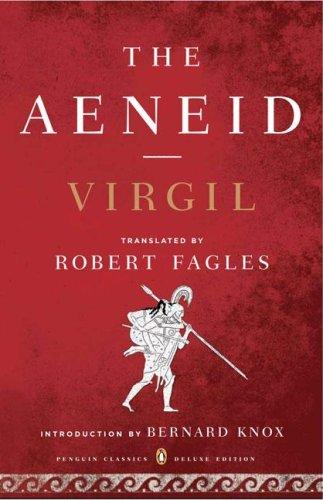
#1 — The Aeneid — trans. Robert Fagles (2006)
- Readability: High — Free verse line reads fluently
- Accuracy: Very good — Close to the Latin in sense
- Tone: Modern and even
- Accessibility: Introduction, notes and glossary included
Which translation suits which reader
- Fagles suits first-time readers, because its free verse flows readily and the volume supplies an introduction, notes and a glossary.
- Ruden suits readers who want fidelity to the Latin, since the translation matches Virgil’s line count line for line.
- Dryden suits readers who want a free text, since the free online edition costs nothing and includes his Arguments and Dedication.
- Fitzgerald suits readers who like rhythmic verse, since the loose six-beat line gives the poem a steady cadence.
- Mandelbaum suits readers following the Latin line, since the blank verse keeps close to Virgil’s line.
- Lombardo suits readers who read aloud, since the colloquial verse is intended for oral delivery.
- Ahl suits readers who want Latin nuance, since the verse keeps the Latin line count and reproduces word play.
- Ferry suits readers of modern poetry, since an American poet renders the epic in unrhymed verse of varying line length.
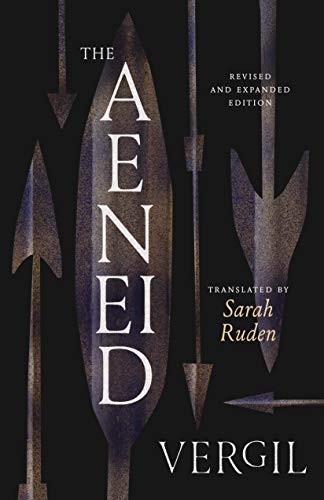
#2 — The Aeneid — trans. Sarah Ruden (2021)
- Readability: High — Clear verse that holds to the Latin line
- Accuracy: Excellent — Matches Virgil’s line count, line for line
- Tone: Plain and direct
- Accessibility: Introduction on hexameter and violence
#3 — The Aeneid — trans. John Dryden (1697)
- Readability: Moderate — Couplets and period diction demand adjustment
- Accuracy: Good — Good, though a verse paraphrase
- Tone: Formal and ceremonial
- Accessibility: Free online, with Argument and Dedication
#4 — The Aeneid — trans. Robert Fitzgerald (1983)
- Readability: High — Rhythmic six-beat line carries the narrative
- Accuracy: Very good — Close to the sense, loose in meter
- Tone: Measured and rhythmic
- Accessibility: Postscript on the poem and method

#5 — The Aeneid — trans. Allen Mandelbaum (1971)
- Readability: Moderate — Blank verse is dense in places
- Accuracy: Excellent — Follows the Latin line closely
- Tone: Formal and weighty
- Accessibility: Fewer aids than other editions listed
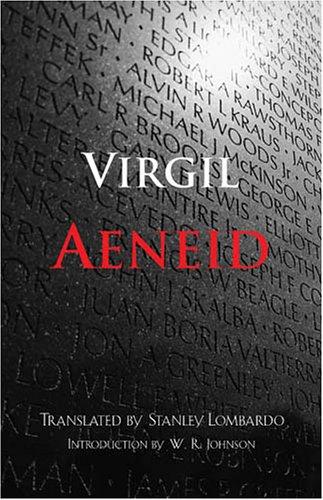
#6 — The Aeneid — trans. Stanley Lombardo (2005)
- Readability: Very high — Colloquial verse moves quickly and plainly
- Accuracy: Good — Good, with a spoken idiom
- Tone: Conversational and direct
- Accessibility: Introduction, map and glossary of names
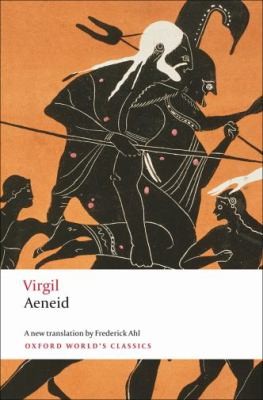
#7 — The Aeneid — trans. Frederick Ahl (2007)
- Readability: Moderate — Compressed verse asks for close attention
- Accuracy: Excellent — Keeps line count and reproduces word play
- Tone: Dense and precise
- Accessibility: Introduction by Elaine Fantham

#8 — The Aeneid — trans. David Ferry (2017)
- Readability: High — Unrhymed verse reads smoothly
- Accuracy: Good — Good fidelity to the sense
- Tone: Contemporary poetic voice
- Accessibility: Modern verse form, fewer aids noted
About the Translators
Robert Fagles’s The Aeneid was published by Penguin Classics in 2006. The volume carries an introduction by Bernard Knox, notes and a glossary. Fagles renders the twelve books in a free verse line of variable length.
Sarah Ruden is a classicist. Her Aeneid was published by Yale University Press in 2008. Her translation matches Virgil’s line count, line for line, and her introduction discusses the Latin hexameter and the poem’s representation of violence.
John Dryden’s translation was first published in 1697 as part of The Works of Virgil, printed for Jacob Tonson. It is a verse translation in heroic couplets, and the free online edition includes his Argument to each book and his Dedication of the Aeneis.
Robert Fitzgerald’s The Aeneid was published by Random House in 1983. He translates into a loose six-beat line and appends a postscript on the poem and on his method.
Allen Mandelbaum’s The Aeneid of Virgil was published by the University of California Press in 1971. It is in blank verse that follows the Latin line closely.
Stanley Lombardo’s Aeneid was published by Hackett in 2005. He writes in a colloquial verse intended for oral delivery, and the volume includes an introduction by W. R. Johnson, a map and a glossary of names.
Frederick Ahl’s Aeneid was published by Oxford University Press (Oxford World’s Classics) in 2007, with an introduction by Elaine Fantham. His verse keeps the Latin line count and reproduces word play.
David Ferry is an American poet. His The Aeneid was published by the University of Chicago Press in 2017, in unrhymed verse of varying line length.
Themes
Virgil’s Aeneid is a Latin epic in twelve books. The poem concerns the Trojan hero Aeneas, who escapes the fall of Troy and travels to Italy. The English translations compared here all render this narrative, but each differs in verse form, closeness to the Latin and supporting material, and the choice among them shapes how the poem is read.
The translations differ chiefly in form. Fagles uses a free verse line of variable length, Fitzgerald a loose six-beat line, Mandelbaum blank verse and Dryden heroic couplets. Ruden and Ahl follow the Latin line for line, and their versions keep the Latin line count. Each approach gives the poem a different pace and texture.
Frequently Asked Questions
Which Aeneid translation is best for a first-time reader?
Fagles’s translation is rated best for first-time readers. Its free verse line of variable length reads fluently, and the Penguin Classics volume includes an introduction by Bernard Knox, notes and a glossary.
Is there a free English translation of the Aeneid?
Yes. The free online edition of Dryden’s verse translation, in heroic couplets, is free to read online. It includes his Argument to each book and his Dedication of the Aeneis.
Which translations keep Virgil’s Latin line count?
Ruden’s translation matches Virgil’s line count, line for line. Ahl’s verse also keeps the Latin line count and reproduces word play. Mandelbaum’s blank verse follows the Latin line closely.
Which translation is written to be read aloud?
Lombardo’s Aeneid is written in a colloquial verse intended for oral delivery. The Hackett volume also includes an introduction by W. R. Johnson, a map and a glossary of names.
Which translations come with an introduction and notes?
Fagles’s volume has an introduction by Bernard Knox, notes and a glossary. Lombardo’s has an introduction, a map and a glossary of names. Ahl’s has an introduction by Elaine Fantham. Ruden’s has an introduction, and Fitzgerald’s a postscript.
Which translations use free verse and which use unrhymed verse?
Fagles uses free verse of variable length. Ferry uses unrhymed verse of varying line length, and Mandelbaum uses blank verse. The free online edition of Dryden’s translation is in heroic couplets.
Can Dryden’s line numbers be used as Latin line references?
No. Dryden’s line numbers differ from the Latin, so they cannot serve as Latin line references. Translations that keep the Latin line count, such as Ruden’s and Ahl’s, correspond more closely.
Translator and edition details checked against the publishers’ editions. Last reviewed: October 2026.
As an Amazon Associate, we earn from qualifying purchases.
The journey of Aeneas, the gods, the characters and the synopsis cover the poem itself.